How to chase unpaid invoices without the awkward phone calls
You did the work. The customer was happy. And now the invoice is two weeks overdue and you're putting off the phone call.
Chasing money is the job nobody wants. It feels awkward, it eats into time you could spend on paid work, and it's easy to let it slide until a late payment turns into a cash flow problem.
The good news is that most late payments aren't customers refusing to pay. They're invoices that got buried, payment that wasn't easy, or nobody reminding them. This guide sets out a simple, polite chasing routine for UK small businesses, the reminder wording to use, your legal rights if things go further, and how to automate most of it so you rarely have to pick up the phone.
Start before the invoice is late
The easiest invoice to chase is one that gets paid on time. A few habits make a big difference:
- Agree payment terms up front. Put them in your quote or contract, for example "payment due within 14 days of invoice", so nobody is surprised.
- Invoice straight away. Send it the day the job is done, while the customer is still pleased with the work.
- Make every invoice clear. Your business name and contact details, the customer's name, an invoice number, the date, what the work was, the amount, the due date and how to pay.
- Make paying easy. A pay-by-card link on the invoice removes the "I'll do the bank transfer later" delay. Fewer steps means faster payment.
- Take deposits on bigger jobs. Asking for part of the fee when a quote is accepted protects you and filters out customers who were never going to pay.
A simple chasing timeline
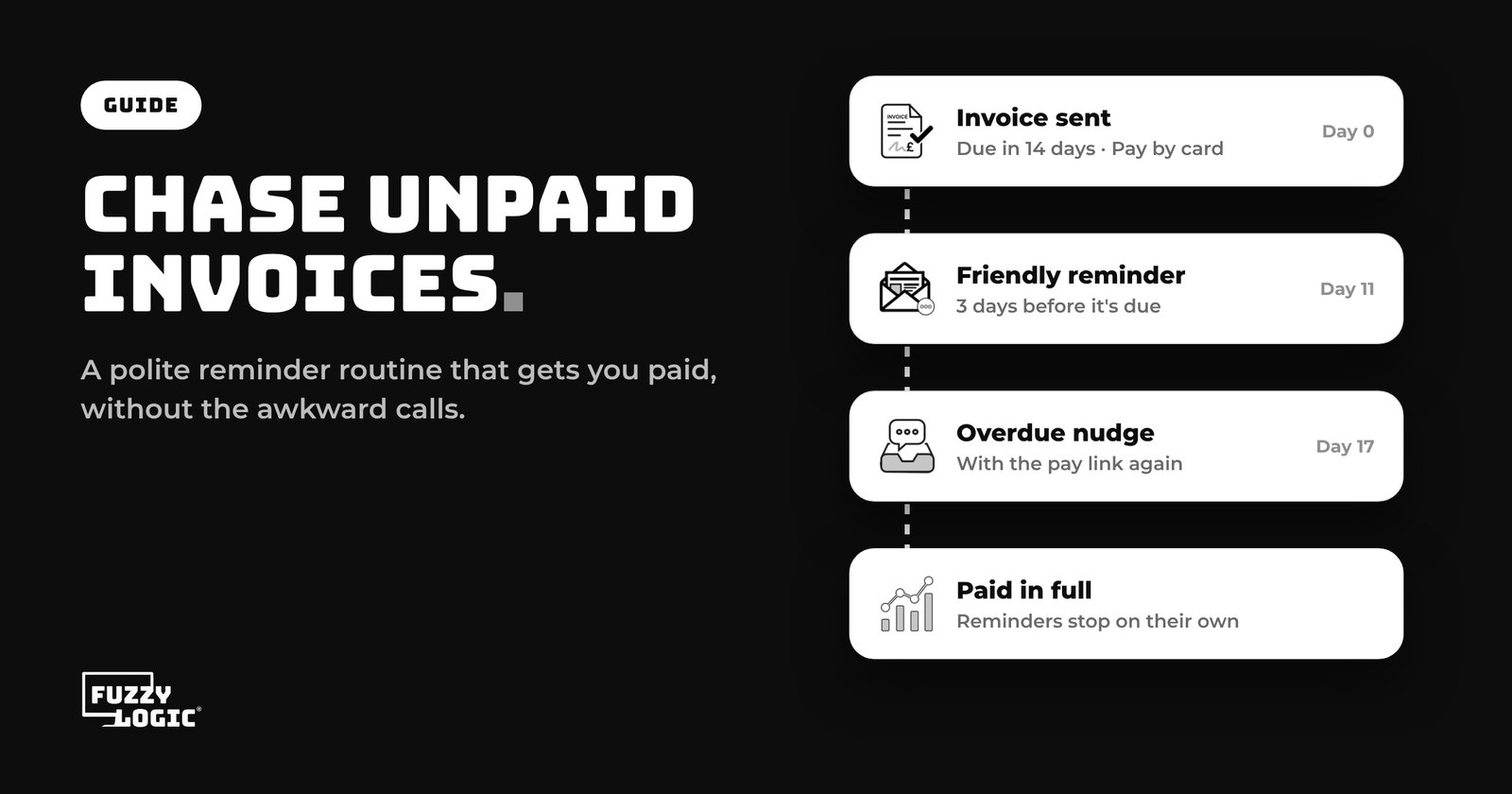
Most businesses chase too late and too rarely. A steady, friendly rhythm works far better than one cross phone call a month later. Here's a timeline you can copy:
- 3 days before the due date: a friendly heads-up that payment is due soon, with the pay link.
- On the due date: a short note that the invoice is due today.
- 3 days overdue: a polite reminder. Assume it was missed, not ignored.
- 7 to 10 days overdue: a firmer reminder that asks for a payment date.
- 14 to 21 days overdue: a phone call or personal message from you, then a final written notice.
- 30 days or more overdue: decide whether to add late payment interest, use a formal letter before action, or take it further.
Send reminders by email and text. Many people read a text within minutes, while an email can sit unopened for days.
What to say: reminder wording that keeps it friendly
Keep each message short, polite and specific. Always include the invoice number, amount, due date and a way to pay right now. Some examples:
Before the due date: "Hi Sam, just a quick reminder that invoice 1042 for £480 is due on Friday. You can pay by card here: [link]. Thanks again for your business."
A few days late: "Hi Sam, invoice 1042 for £480 was due on Friday and we haven't seen payment yet. It's easy to miss, so here's the link again: [link]. Let me know if anything's not right."
Firmer: "Hi Sam, invoice 1042 for £480 is now 10 days overdue. Please could you pay it this week, or let me know when we can expect payment? Pay here: [link]."
Ending with "let me know if anything's not right" matters. If the customer has a problem with the work, you want to hear about it now, not after a month of silence.
When to pick up the phone
If two or three reminders haven't worked, a short call usually does. Keep it calm and practical: confirm they have the invoice, ask if there's a problem, and agree a date. If they're struggling, offering to split the payment is often better than waiting for nothing.
Afterwards, send a quick message confirming what you agreed, so there's a written record.
Your rights if a business customer pays late
If your customer is another business, UK late payment law gives you some extra options. According to GOV.UK:
- When a payment is late: if you didn't agree a payment date, the payment is late 30 days after the customer gets the invoice, or after you deliver the goods or service if that's later.
- Statutory interest: you can charge interest of 8% plus the Bank of England base rate on late business-to-business payments, unless your contract sets a different rate. To add it, send a new invoice.
- Debt recovery costs: you can also claim a fixed sum of £40 for debts up to £999.99, £70 for £1,000 to £9,999.99 and £100 for £10,000 or more, once per payment.
These rules apply to business customers, not members of the public. Many small businesses mention them in their terms and only use them for persistent late payers, as a nudge rather than a first resort. If a debt still isn't paid, GOV.UK explains how to make a court claim for money. This guide is general information, not legal advice, so speak to a solicitor or adviser before taking formal action.
Automate the chasing so you don't have to
The routine above works, but only if someone remembers to do it. That's where most businesses fall down: reminders live in someone's head, or on a sticky note, and they don't go out when they should.
Invoicing software with automatic reminders fixes that. You set the timeline once and every invoice follows it:
- Reminders go out before and after the due date by email or text, using your wording.
- Every reminder includes the pay-by-card link, so paying takes seconds.
- Reminders stop automatically when the invoice is paid, so nobody gets chased by mistake.
- You can see who owes what at a glance, so the phone calls you do make are the ones that matter.
If you already use automations to follow up new enquiries, as in our guide How to stop losing leads, payment reminders are the same idea at the other end of the job. You can see more examples on our marketing automation page.
Putting it together
Getting paid on time comes down to four things: clear terms, easy payment, a steady reminder routine and knowing your options if a customer still won't pay. Set them up once and chasing stops being a job you dread.
In Fuzzy Logic App, quotes, invoices, card payments and automatic reminders sit in the same place as your customer records, so you can see every quote, invoice and conversation for each customer together. A signed quote can even send the deposit invoice on its own. See how it works on our invoicing and payments page. Invoicing is in every plan, from £99 + VAT a month, with unlimited users and contacts and a 14-day free trial.
Stop chasing, start getting paid
Start a 14-day free trial of Fuzzy Logic App, or book a free call and we'll show you automatic payment reminders working.
Read next: The real cost of running your business on six different apps